


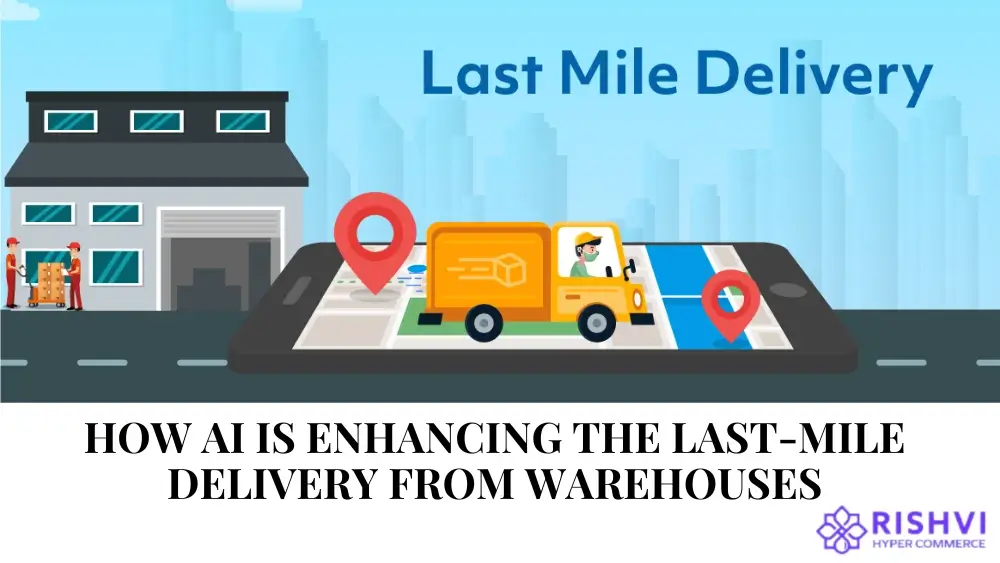
Last-mile delivery—the final step in a product’s journey from a warehouse to the customer—is often the most challenging and expensive part of the logistics process. Inefficient routing, unpredictable traffic, and high fuel costs can lead to delays and increased operational expenses. However, artificial intelligence (AI) is transforming last-mile delivery by optimizing routes, reducing delivery times, and significantly cutting costs.
The Challenges of Last-Mile Delivery
Before diving into how AI is solving last-mile delivery problems, it’s essential to understand the key challenges faced by businesses:
- High Costs: Last-mile delivery accounts for nearly 53% of total shipping costs, making it the most expensive part of logistics.
- Traffic & Route Inefficiencies: Urban congestion, unpredictable road conditions, and inefficient routing lead to delays.
- Customer Expectations: Consumers demand fast, accurate, and low-cost deliveries, adding pressure on logistics companies.
- Failed Deliveries: Missed or unsuccessful deliveries increase costs and impact customer satisfaction.
AI is stepping in to address these issues with intelligent solutions that streamline delivery operations.
Route Optimization with AI
One of the most significant ways AI is improving last-mile delivery is through route optimization. Traditional delivery systems rely on fixed routes or manual planning, which can be inefficient. AI-driven route optimization enhances this by:
1. Real-Time Traffic Analysis
AI-powered systems use real-time data from GPS, traffic sensors, and historical trends to suggest the fastest and most efficient delivery routes. These algorithms continuously update routes based on:
- Road congestion
- Accidents or road closures
- Weather conditions
By dynamically adjusting delivery paths, AI ensures timely deliveries while reducing fuel consumption and vehicle wear and tear.
2. Machine Learning for Delivery Predictions
Machine learning (ML) models analyze past delivery data to predict the best delivery windows. This minimizes idle time, avoids peak traffic hours, and optimizes fleet usage, ensuring maximum efficiency.
3. Autonomous Vehicle Navigation
AI is also playing a crucial role in enabling autonomous delivery vehicles and drones to navigate efficiently, further reducing dependency on human drivers and minimizing delivery errors.
AI’s Impact on Reducing Delivery Times & Costs
1. Faster Deliveries with AI-Powered Automation
By integrating AI with warehouse management systems, businesses can automate order processing, reducing the time it takes to dispatch packages. AI-driven robots and automated sorting systems streamline fulfillment, ensuring deliveries start sooner.
2. Smart Fleet Management & Fuel Efficiency
AI-based fleet management tools monitor vehicle performance, fuel consumption, and driver behavior to reduce operational costs. Features include:
- Fuel Optimization: AI minimizes fuel usage by selecting routes with fewer stops and less congestion.
- Predictive Maintenance: AI can detect vehicle issues before they cause breakdowns, reducing repair costs and downtime.
3. Reducing Failed Deliveries with AI
Failed deliveries add significant costs to logistics operations. AI helps mitigate this issue by:
- Enhancing Address Accuracy: AI tools correct incorrect addresses using geolocation and historical data.
- Predictive Customer Behavior: AI analyzes customer patterns to schedule deliveries when recipients are most likely to be home.
- Smart Lockers & Alternative Pickup Points: AI helps identify optimal locker locations and pickup points, reducing delivery failure rates.
The Future of AI in Last-Mile Delivery
The role of AI in last-mile logistics is continuously evolving. Some emerging trends include:
- Drone & Robot Deliveries: Companies like Amazon and FedEx are already testing AI-powered drone deliveries for faster service.
- Hyperlocal Warehousing: AI is enabling businesses to use small, strategically placed micro-warehouses to reduce delivery distances.
- Sustainable Logistics: AI-driven route optimization helps reduce carbon emissions by selecting eco-friendly routes and optimizing vehicle loads.
Conclusion
AI is revolutionizing last-mile delivery by addressing inefficiencies, cutting costs, and improving customer experiences. Through advanced route optimization, predictive analytics, and automation, businesses can enhance delivery speed while reducing operational expenses. As AI technology advances, we can expect even more innovative solutions to further transform the logistics industry.
By embracing AI-driven logistics, companies can stay competitive, reduce costs, and meet ever-growing customer expectations for fast and reliable deliveries. The future of last-mile delivery is smart, efficient, and powered by AI.