


As the UAE prepares to implement mandatory e-invoicing under the guidelines of the Federal Tax Authority (FTA), businesses must understand one critical reality:
Submitting an invoice is not enough.
It must pass strict validation rules.
If your invoice fails validation, it will be rejected, and that can delay payments, impact VAT reporting, and create compliance risks.
In this article, we explain:
- How invoice validation works
- Key UAE e-invoicing data validation rules
- Common reasons invoices get rejected
- How businesses can prevent errors
How UAE E-Invoicing Validation Will Work
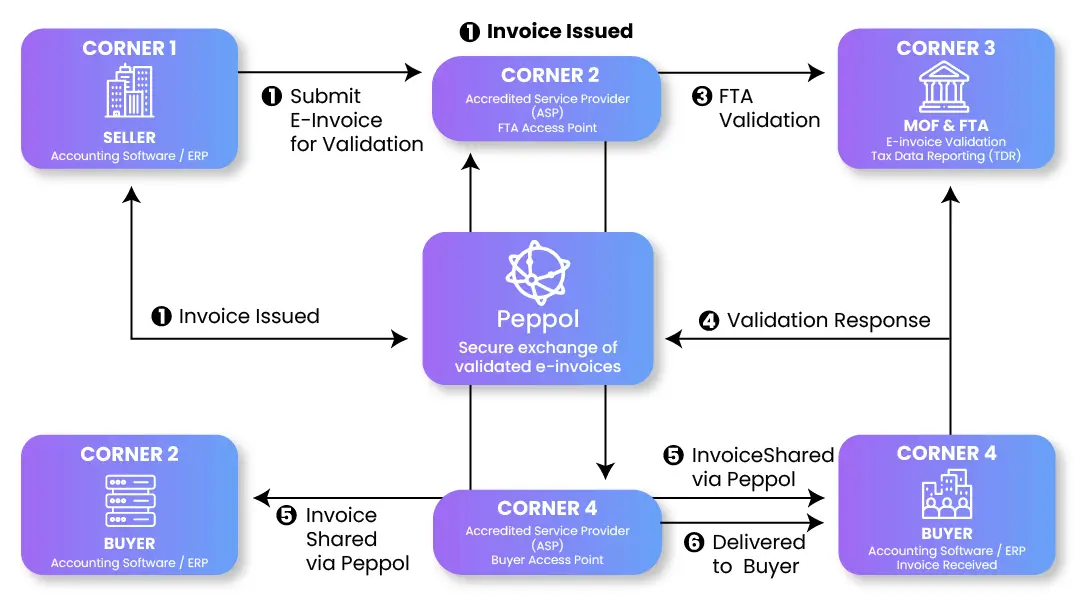
Under the UAE’s upcoming 5-corner e-invoicing model:
- The supplier generates the invoice in structured XML format.
- The invoice is sent to an accredited service provider (ASP).
- The invoice is validated.
- If compliant, it is forwarded to the buyer.
- The data is shared with the FTA.
Validation happens before the invoice is officially accepted.
If errors are found, the invoice is rejected and must be corrected and resubmitted.
What Are Data Validation Rules?
Data validation rules ensure:
- Required fields are present
- VAT calculations are correct
- TRN numbers are valid
- Invoice structure follows UAE schema
- No duplicate invoice numbers exist
- Data format complies with technical standards
Think of it like a “compliance checkpoint” before the invoice becomes legally valid.
Key UAE E-Invoicing Data Validation Rules
1. Mandatory Field Validation
The invoice must include:
- Supplier Name
- Supplier TRN
- Buyer Name
- Buyer TRN (if VAT registered)
- Invoice Number
- Invoice Date
- Taxable Amount
- VAT Amount
- Total Amount
- VAT Rate
- Currency
If any required field is missing → the invoice is rejected.
2. TRN Validation
The Tax Registration Number (TRN) must:
- Be 15 digits
- Be active
- Match FTA records
Businesses can verify TRNs via the official FTA portal: https://tax.gov.ae
If the TRN is invalid or inactive → rejection.
3. VAT Calculation Validation
The system will check:
VAT Amount = Taxable Amount × VAT Rate
Example:
Taxable Amount: AED 1,000
VAT (5%): AED 50
Total: AED 1,050
If VAT is calculated incorrectly → automatic rejection.
Even rounding errors can cause failure.
4. Invoice Number Uniqueness
Each invoice number must:
- Be unique
- Follow sequential logic
- Not duplicate previous submissions
Duplicate invoice numbers are one of the most common rejection reasons globally.
5. XML Structure Validation
The invoice must follow the official UAE e-invoice XML schema.
Common structure errors include:
- Incorrect tags
- Wrong field formatting
- Invalid currency codes
- Missing digital signature
- Incorrect date format (must follow ISO standard)
If the XML structure does not match the schema → the invoice fails immediately.
6. Digital Signature & Authentication
Invoices must:
- Be digitally signed
- Be transmitted securely via approved service providers
- Maintain data integrity
If signature validation fails → the invoice is rejected.
Common Invoice Rejection Reasons in UAE (Expected Based on Global Standards)
Based on international e-invoicing models (such as Saudi Arabia and Europe), the most common rejection reasons include:
1. Incorrect TRN
Wrong number, expired registration, or buyer not VAT registered.
2. VAT Mismatch
Incorrect tax calculation or wrong VAT category (zero-rated vs standard-rated).
3. Missing Mandatory Fields
Leaving the buyer’s TRN blank when required.
4. Incorrect Date Format
Using DD/MM/YYYY instead of ISO format (YYYY-MM-DD).
5. Duplicate Invoice Number
Submitting an already-used invoice number.
6. Wrong Currency Code
Using AED instead of the ISO code format (e.g., “AED”).
7. Arithmetic Errors
Subtotal + VAT ≠ Total.
What Happens If an Invoice Is Rejected?
If validation fails:
- Invoice status = Rejected
- It is not legally valid
- It must be corrected
- It must be resubmitted
- Delays may impact payment timelines
Repeated errors may also increase audit risk.
Why Validation Accuracy Is Critical for Businesses
E-invoicing is not just accounting automation.
It directly affects:
- VAT compliance
- Audit risk
- Cash flow
- Payment cycles
- Regulatory penalties
One small data error can delay an entire transaction.
How Businesses Can Avoid Invoice Rejections
1. Use Compliant ERP Software
Your system must support the UAE XML schema and FTA requirements.
2. Validate TRNs Before Issuing Invoices
Always verify the buyer’s TRN on the FTA portal.
3. Automate VAT Calculations
Avoid manual tax entries.
4. Implement Pre-Submission Checks
Use automated validation tools before sending invoices.
5. Train Your Accounting Team
Ensure they understand:
- VAT categories
- Zero-rated vs exempt supplies
- Mandatory invoice fields
- Proper invoice numbering
Final Thoughts
UAE e-invoicing will introduce strict validation controls that eliminate incorrect or incomplete invoices.
Businesses that prepare early will experience:
- Faster processing
- Fewer rejections
- Better compliance
- Reduced audit risk
The key takeaway:
Accuracy is no longer optional.
Validation will be automatic. Connect for more!